

Under the leadership of Ferenc Biró, the Integrity Authority leads the European Network for Public Ethics
Date of publication:
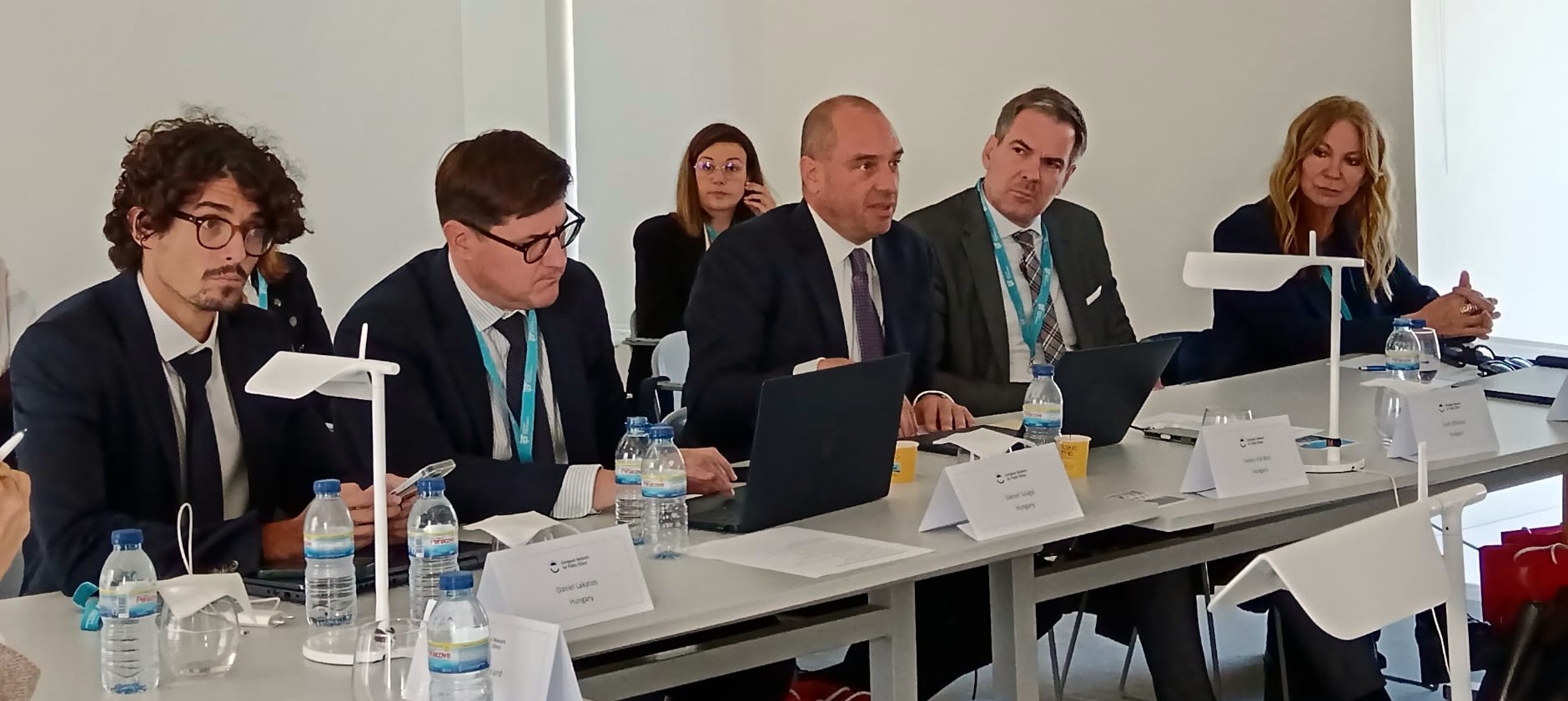
Ferenc Biró, President of the Integrity Authority, has unanimously been elected President of the network of European anti-corruption authorities for the 2026–2028 term. The European Network of Public Ethics (ENPE) elected its new president at its plenary meeting held in Coimbra, Portugal. The Hungarian presidency follows that of Italy’s National Anti-Corruption Authority (Autorità Nazionale Anticorruzione, ANAC).
Since its establishment, ENPE has been led by the French and Italian authorities, both of which play a leading role in European anti-corruption cooperation. For the first time, the network will be led by a Hungarian institution, with its first president from Central and Eastern Europe.
ENPE is the European Union’s active and influential association of independent anti-corruption agencies. The organisation is a network of European authorities responsible for public ethics, integrity, and corruption prevention. Its objectives are to strengthen integrity in the public sector, promote the alignment of practices across Member States, and represent a common professional position toward European institutions.
“Any one authority, acting alone, is just one voice among many in Brussels. Together, however, we represent nearly twenty institutions from across the European Union, bringing first-hand experience of how integrity rules work in practice – and where they fall short”, said Ferenc Biró, addressing members of the network during the presentation of Hungary’s application.
The Hungarian presidency comes at a time when the European Union’s anti-corruption framework is undergoing significant changes.
The EU’s recently adopted anti-corruption directive imposes new requirements on national authorities regarding national strategies, risk analysis, and prevention. Member states are required to transpose these requirements into practice by June 2028.
At the same time, the European Commission is working on a new EU anti-corruption strategy, while preparations are also underway for the EU’s next long-term budget, in which rule-of-law elements will feature as more explicit requirements than before.
Therefore, the Integrity Authority believes it is crucial that the relevant authorities in Member States respond to these changes in a coordinated manner and, where necessary, receive expert assistance with implementation.
“The next two years will be decisive in the alignment of European integrity efforts. As part of ENPE, we collectively represent the practical experience of approximately two dozen institutions. Our objective is to make ENPE the forum where European regulations are translated into functioning practice and where our shared experiences help shape future regulatory changes”, said Ferenc Pál Biró, President of the Integrity Authority. He added that the fight against corruption is a shared responsibility and a collective duty, and that the Integrity Authority, a relatively young institution, is already playing a key role in this effort.
The programme presented by Ferenc Biró in Coimbra rests on five pillars:
- providing practical support in the transposition of the EU’s anti-corruption directive;
- a coordinated contribution from the national authorities of EU Member States to the European Union’s anti-corruption strategy;
- introducing data-driven and digital integrity instruments, especially in the verification of declarations of assets and conflicts of interest;
- the integrity of EU funds, public procurement procedures, and defence expenditures;
- establishing and ensuring guarantees concerning the independence of national authorities and opening up the network to candidate countries.
“Being elected is a recognition of the work we have been doing at the Integrity Authority for the past four years. At the same time, it also comes with responsibilities. On our own, we can make our voices heard only in our respective capitals; together, we make ourselves heard across Europe. Over the next two years, we will work to ensure that the common European regulations are translated into functioning practice and shared experiences into better regulation”, said Ferenc Biró.
Giuseppe Busìa, leader of the Italian authority handing over the presidency, congratulated the President on being elected: “It was a great honour for ANAC to have had the opportunity to lead ENPE, thereby strengthening cooperation among anti-corruption authorities, the exchange of good practices, and the role of the network in shaping European anti-corruption policies. We extend our heartfelt congratulations to Ferenc Pál Biró on his appointment as the new President of ENPE and have full confidence in his leadership, commitment, and vision for the future. ANAC wishes to work closely with President Biró and remains committed to supporting ENPE in becoming an increasingly influential voice in promoting integrity and combating corruption across Europe”.
The network was established on the initiative of France’s High Authority for transparency in public life (HATVP). The HATVP held the first presidency and continues to serve as the ENPE Secretariat.
“It has never been more important for Europe to raise a strong and united voice in the fight against corruption. ENPE plays a key role in this effort: it liaises with European institutions, represents its members, and helps shape the future of the European Union’s anti-corruption policies”, he added. “The HATVP continues to serve as the network’s secretariat. It looks forward to working closely with the Integrity Authority, which will assume the presidency. Building on the achievements of the outgoing presidency and working together with all ENPE members, it will strive to further strengthen the network’s position, influence, and ambitions at the European level.”
(Pictured, from left to right: Dániel Lakatos, Dániel Szügyi, Ferenc Biró, and Zsolt Ujfalussy, representing the Authority.)